Dental Implants & Restorations
Replace missing teeth with a permanent solution that looks, feels, and works like your natural teeth. Dr. Paula Grisales brings more than 25 years of experience and a personalized, patient-first approach to every implant she places.
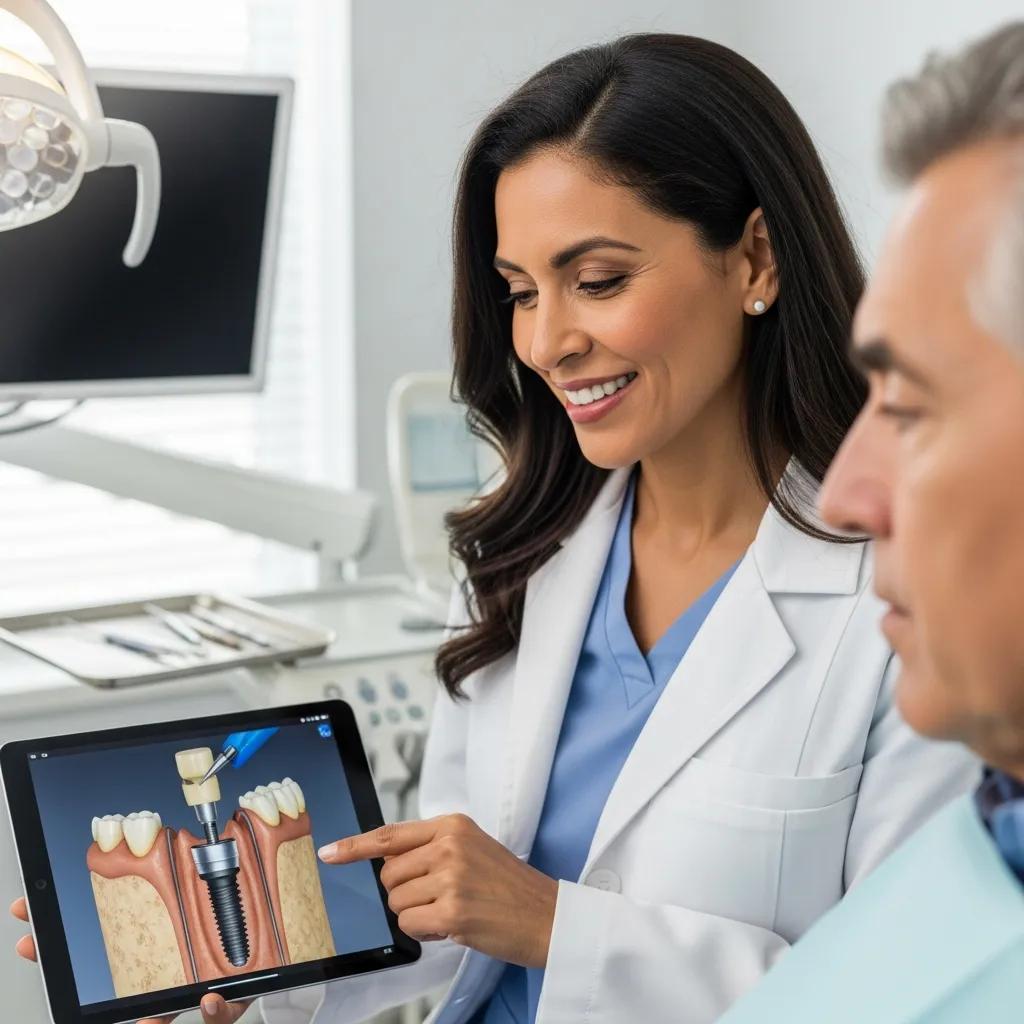
Types & Benefits
Dental implants are artificial tooth roots made of titanium, placed in the jawbone to support a crown, bridge, or denture. They give you a stable foundation that restores both how your smile looks and how it works.
A titanium post, an abutment, and a custom crown replace one missing tooth on their own, without touching the healthy teeth next to it.
Several implants anchor your denture in place, giving you far more stability and confidence than a traditional removable denture.
Each crown is custom-made to match the shape and shade of your natural teeth, so your implant blends right in with your smile.
Because implants are anchored in bone, they don't slip or shift. You can chew, speak, and laugh without thinking twice.
Missing teeth can lead to bone loss over time. Implants stimulate the jawbone like natural roots, helping preserve your facial structure.
With good oral hygiene and regular checkups, dental implants can last for many years, making them one of the most durable tooth replacement options.
The Process
From your first visit to your final crown, Dr. Grisales guides you through every stage, so you always know what comes next.
Step 01
Dr. Grisales examines your mouth, takes digital X-rays, and reviews your gum health, bone, and medical history to confirm implants are right for you and build your personalized plan.
Step 02
Under local anesthesia, a biocompatible titanium post is gently placed into your jawbone. We focus on keeping you comfortable from start to finish.
Step 03
Over the next few months, the implant fuses with your jawbone through a natural process called osseointegration, creating a strong, stable foundation.
Step 04
Once you've healed, an abutment and a custom crown are attached, matched to the shape and shade of your natural teeth for a seamless result.
Am I a Candidate?
Most adults in good general health who are missing one or more teeth are candidates for dental implants. Healthy gums and enough bone in the jaw to support the implant are the most important factors.
During your free consultation, Dr. Grisales evaluates your oral health and medical history to confirm whether implants are right for you. If you need extra preparation first, such as treating gum disease or rebuilding bone, she'll map out a clear path forward.
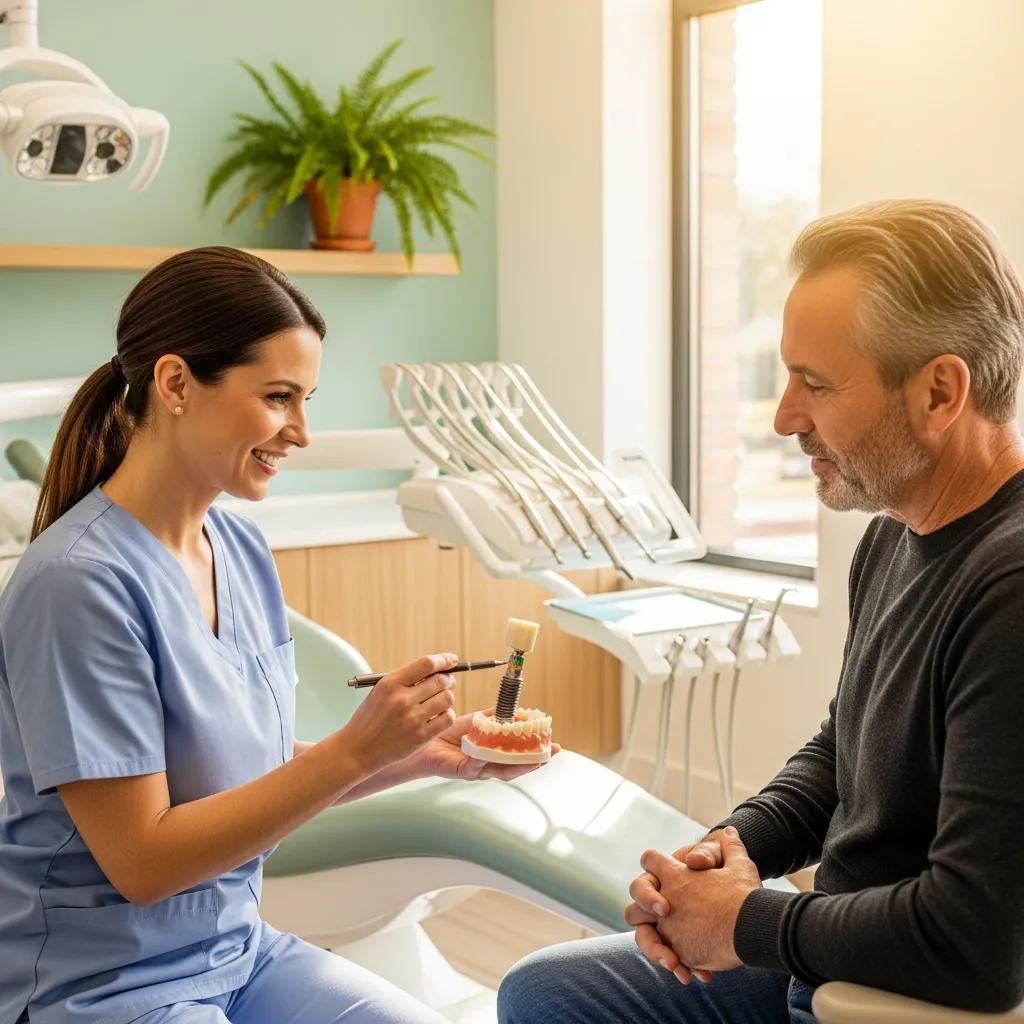
Many patients with these factors can still get implants after preparatory treatment, such as bone grafting.
After Your Procedure
Initial healing usually takes one to two weeks, while the implant continues to fuse with your jawbone over the following months. Following Dr. Grisales' aftercare instructions closely is the best way to protect your new implant.
Manage swelling. Apply ice to your cheek during the first day or two, and take any prescribed medication as directed.
Eat soft foods. Stick to a soft diet for the first few days and avoid chewing directly on the implant site.
Keep it clean, gently. Keep up your oral hygiene, but avoid brushing the implant site directly until Dr. Grisales clears you. Call us if you notice excessive swelling or pain.

Why Patients Choose Us
Getting implants is a big decision. Here's what you can expect when you trust Dr. Grisales and our team with your smile.
Dr. Paula Grisales places your implant herself and brings more than 25 years of dental experience to every step of your treatment.
Our patient-first approach means your treatment plan is built around your needs, your goals, and your timeline.
Find out if implants are right for you, with no cost for your implant consultation and no pressure to decide on the spot.
You'll get a detailed breakdown of your costs at your consultation, plus help with insurance and flexible payment options.
From exams and cleanings to emergency care and restorations, we provide a full range of dental services in one place.
Our office is designed to feel welcoming and relaxing. We take time to listen and explain every step. Se habla español.
Common Questions
Can anyone get dental implants?
Most adults with good oral health are candidates for dental implants. Certain conditions, such as uncontrolled diabetes, severe gum disease, or not enough bone in the jaw, can affect eligibility. A thorough evaluation determines whether implants are right for you, and in some cases additional procedures like bone grafting may be needed to create a stable foundation.
How long does the dental implant process take?
Most cases take a few months from start to finish. After the implant is placed, it needs time to fuse with your jawbone, typically three to six months, before your final crown is attached. If you need a bone graft first, that adds healing time. Dr. Grisales will give you a personalized timeline at your consultation.
How much do dental implants cost in Longwood, FL?
Every case is different. Your cost depends on how many teeth you're replacing, the type of restoration, and whether you need extra steps like bone grafting. At your free consultation, you'll receive a detailed breakdown of your costs so there are no surprises. Our team will also help you understand your insurance benefits and talk through flexible payment options.
Does the implant procedure hurt?
Implants are placed under local anesthesia, so you shouldn't feel pain during the procedure. Afterward, most patients have some soreness or swelling for a few days, which is usually managed with ice and the medication Dr. Grisales recommends.
How long do dental implants last?
Dental implants are designed to be a long-term solution, often lasting 10 to 15 years or even longer with proper care. Good oral hygiene, regular dental checkups, and avoiding smoking all help your implants last. The titanium post is biocompatible and can't develop cavities, making implants one of the most durable tooth replacement options.
What is the difference between dental implants and dentures?
Both replace missing teeth, but they work differently. Implants are placed in the jawbone, providing a permanent solution that looks and functions like natural teeth. Dentures are removable and rest on the gums. Dentures can cost less upfront, but implants offer greater stability, better chewing ability, and help protect the jawbone, which is why many patients prefer them.
What are the potential risks of dental implants?
Dental implants are generally safe, but like any procedure they carry some risk, including infection at the implant site, nerve irritation, or sinus issues with some upper implants. Careful planning by an experienced dentist and following your aftercare instructions help keep these risks low.
How can I prepare for my implant consultation?
Bring a list of your medications and your medical history, along with any recent dental records or X-rays you have. It also helps to write down your questions ahead of time so you can make the most of your visit with Dr. Grisales.
Dr. Grisales and our team are ready to evaluate your situation and design an implant plan that fits your life, your smile, and your budget.
Free implant consultation · Flexible payment options · Se habla español