

Single‑Tooth Dental Implants: How They Work, Costs, Benefits, and What to Expect During Recovery
Single‑tooth dental implants are a dependable way to replace a missing tooth, improving both how your smile looks and how your mouth functions. Below we cover the essentials—what an implant is, typical costs, the step‑by‑step procedure, the main benefits, and recovery expectations. Losing a tooth can affect confidence and oral health, but a well‑placed implant can restore chewing, speech and the appearance of your smile. We’ll explain the parts of an implant, costs to expect, the treatment timeline, and how implants compare to other options.
What Is a Single Tooth Dental Implant and How Does It Restore Your Smile?
A single‑tooth dental implant is a small surgical device placed into the jawbone to support a replacement tooth—usually a crown. It reproduces the form and function of a natural tooth by acting like a root, so the replacement looks, feels, and performs like the original. Typical implants have three parts: the implant post, the abutment, and the crown.
What Are the Components of a Single Tooth Implant?
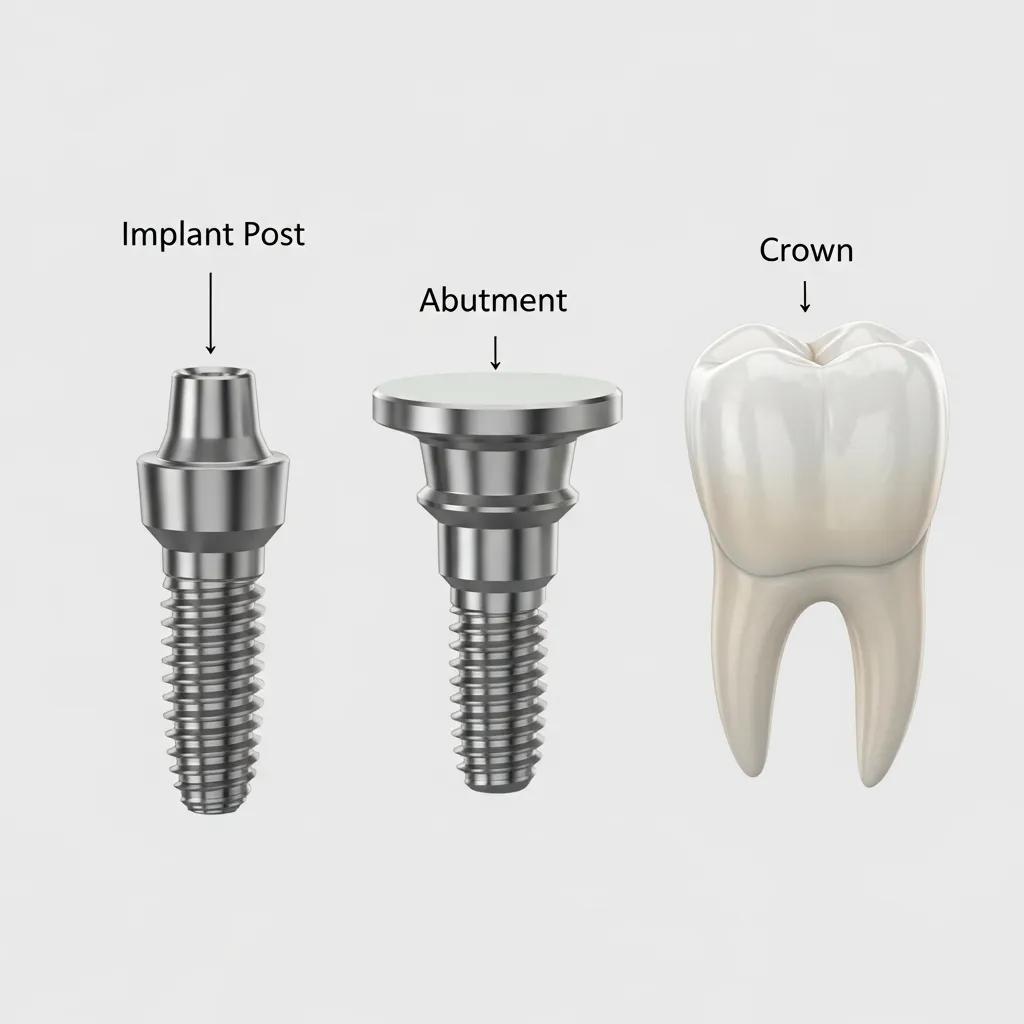
A single‑tooth implant is made of three main pieces:
- Implant Post: A titanium screw placed into the jawbone that acts like the tooth root.
- Abutment: The connector that joins the implant post to the visible crown.
- Crown: The lifelike tooth that sits above the gumline and restores appearance and chewing.
Together these parts create a stable, long‑lasting replacement that functions like a natural tooth.
How Does the Implant Integrate with the Jawbone?
Success depends on osseointegration—the biological process where bone grows around the implant post and bonds to it. This creates a solid foundation for biting and chewing. Osseointegration usually takes about 3 to 6 months as bone cells attach to the implant, which is why the full treatment timeline spans several months.
What Is the Cost of a Single Tooth Implant and How Can You Finance It?
Costs vary depending on case complexity, practice location, and any extra work like bone grafting. In the United States, a typical single‑tooth implant (implant, abutment, and crown) commonly ranges from $3,500 to $6,000 or more. Your individual price depends on the specifics of your treatment plan.
Which Factors Affect Single Tooth Implant Cost?
Several elements influence overall cost:
- Geographic Location: Fees often reflect local market and living costs.
- Case Complexity: Additional procedures—bone grafts, sinus lifts, or ridge augmentation—add to the total.
- Materials and Components: The brand and material choices for the implant and crown affect price.
What Financing and Insurance Options Are Available for Dental Implants?
Many practices and third parties offer ways to spread the cost. Insurance coverage varies—some plans cover part of the procedure, while others do not. Typical options include:
- Payment Plans: In‑office financing lets you pay over time with predictable monthly payments.
- HSAs and FSAs: Pre‑tax funds from Health Savings Accounts or Flexible Spending Accounts can be used for implants.
- Third‑Party Financing: Specialized lenders offer medical or dental loans for procedures like implants.
What Is the Step-by-Step Procedure for a Single Tooth Dental Implant?
The implant process usually spans several appointments—from planning to the final crown placement.
What Happens During the Initial Consultation and Planning?
At your first visit the dentist will evaluate your mouth, take images, and map a treatment plan. Typical steps include:
- Dental Health Evaluation: Checking for gum disease, decay, or other concerns that could affect outcome.
- Imaging: X‑rays or 3D scans assess bone volume and optimal implant position.
- Discussion of Options: Your clinician will explain the procedure, expected results, timeline, and any additional treatments needed.
This planning visit ensures we choose the safest, most predictable approach for your implant.
Single Tooth Implant Decision Factors: Esthetics & Cost
Clinicians often decide whether to remove a tooth and place an implant or to try to preserve it with nonsurgical endodontic therapy. Important considerations are the tooth’s restorability, bone quality, esthetic goals, the cost‑benefit balance, and the patient’s preference.
A review of factors influencing treatment planning decisions of single‑tooth implants versus preserving natural teeth with nonsurgical endodontic therapy, 2008
How Is the Implant Placement Surgery Performed and What Is the Healing Timeline?
Implant placement is normally done under local anesthesia and follows these general steps:
- Surgical Placement: The gum is opened to expose the bone and the implant post is placed into the jaw.
- Healing Period: A 3 to 6 month healing period allows osseointegration to occur and stabilize the implant.
- Crown Placement: After integration, an abutment is attached and the final crown is fitted.
From first consult to final crown, the full process can take several months, but it yields a durable, natural‑feeling result.
Choosing the right surgical timing and technique—immediate versus delayed placement, and location‑specific protocols—is important for successful outcomes.
Single Tooth Implant Placement & Surgical Protocols
Timing (for example, immediate placement after extraction), the surgical technique, and the loading protocol are key factors that affect success. Different locations in the mouth (anterior vs. posterior, upper vs. lower jaw) may require specific protocols.
Placement and Loading Protocols for Single Implants in Different Locations: A Systematic Review., W Zhou, 2021
What Are the Benefits of Single Tooth Dental Implants Compared to Alternatives?
Single‑tooth implants offer several advantages over bridges and removable dentures—most notably in function, longevity, and bone preservation.
How Do Implants Preserve Bone and Improve Oral Health?
When a tooth is missing, the jawbone can lose volume because it’s no longer stimulated. An implant transmits chewing forces into the bone, keeping it healthy and helping maintain facial structure. Implants also avoid putting pressure on neighboring teeth, so adjacent teeth remain intact.
What Are the Differences Between Dental Implants and Bridges?
Bridges and implants both replace missing teeth, but they differ in approach and long‑term impact:
- Longevity: With good care, implants can last 25 years or more—often a lifetime—while bridges generally need replacement every 5–15 years.
- Maintenance: Implants are cleaned like natural teeth. Bridges may require special flossing tools and more frequent monitoring.
- Effect on Adjacent Teeth: Bridges typically require reshaping neighboring teeth for support; implants stand alone and leave adjacent teeth untouched.
Weighing the long‑term benefits and costs helps many patients choose implants over fixed partial dentures.
Single Tooth Implant Cost vs. Fixed Partial Denture
Over a 10‑year model, a single dental implant was estimated at US $4,030 versus US $2,070 for a three‑unit fixed partial denture (FPD). Implant survival is influenced by factors like bone quantity and quality and implant design.
Economic evaluation of single‑tooth replacement: dental implant versus fixed partial denture., Y Kim, 2014
In short, single‑tooth implants offer a stable, natural appearance and functionality that many patients prefer for long‑term tooth replacement.
Frequently Asked Questions
What is the typical recovery time after a single tooth dental implant procedure?
Healing varies by person, but expect roughly 3 to 6 months for full osseointegration. Initial gum healing usually takes a week or two, during which mild swelling and tenderness are common. Once the implant has integrated, your dentist will place the final crown. Following post‑op instructions helps speed healing and reduce complications.
Are there any risks or complications associated with single tooth dental implants?
As with any surgery, implants carry possible risks such as infection at the site, nerve irritation, sinus issues for upper‑jaw implants, or failure if there’s insufficient bone. These risks are relatively low with proper planning and an experienced provider. Discuss your medical history and any concerns with your dentist to reduce risk.
How do I care for my dental implant after placement?
Care is much like natural teeth: brush twice daily, floss daily (including around the implant), and keep regular dental checkups. Avoid very hard foods and address habits like grinding. If you experience unusual pain, swelling, or mobility, contact your dentist promptly.
Can anyone get a single tooth dental implant?
Many people are good candidates, but ideal candidates have adequate jawbone and healthy gums. Certain conditions—uncontrolled diabetes, heavy smoking, or other systemic issues—can increase risk. A full dental and medical evaluation will determine whether an implant is the best option or if alternatives are recommended.
What should I expect during the dental implant consultation?
The consultation includes a thorough oral exam, X‑rays or 3D scans to evaluate bone, and a review of your medical history. Your clinician will explain the proposed procedure, timeline, risks, and expected outcomes, and answer your questions. Financing and alternatives are discussed as part of a tailored treatment plan.
How do single tooth implants compare to dentures in terms of comfort and functionality?
Single‑tooth implants typically offer better comfort and function than dentures. Because implants are anchored into bone, they provide stability for normal chewing and speaking without slipping. Dentures can be less stable and may need adhesives. Implants also protect jawbone health, reducing the bone loss that can change facial appearance over time.